How do you handle personal attacks?
It could be anything from a boss ignoring your ideas, to a peer who respects you in public – only to destroy you behind your back. Has it happened to you?
It’s easier to teach brain-compatible tone skills to others, than to model them in tough situations we all face daily. When research and brain compatible communication skills come together, though, the day moves out of the trenches with amazing agility.
If you’ve suffered unfair financial loss in the past 2 years, you’ll agree there’s plenty to gripe about if political discussions emerge.

Communicate Under Attack
Nevertheless, disagreement becomes an art that draws together differences when you help people to face tough or controversial issues. Whenever you apply tone to disagree you can brace your brain from subtle barbs a few folks toss into the ring when you least expect attacks. Some call it a lack of civility.
Whatever you name it, most would agree, that tone takes different shapes in different settings. Fewer people however, spot how basic tone skills can spark brainpower as armor when they’re under attack. It’s also fuel to lead hot topics well before attacks stoke angry responses back.
With social media growth, online tone is more critical than ever, and yet you often see people throw barbs at others – however subtle - in the name of critical thinking. Yikes – it’s more like kill-the-diversity thinking! Survey your tone skills to see where your communication strength and weaknesses lie.
Tone skills impact innovation
In successful exchanges, learning comes from disagreements that showcase opposite angles of an issue. The result? Innovative solutions that create wins for the wider community. Here are a few tips for disagreeing in ways that build goodwill. It’s a daily choice though to use tone for tonic or toxins in tough times.
Have you seen a person who lacks tone skills jump into the fray demanding that one side only exists? Believe it or not – that one person, because of harmful chemicals such as cortisol, can trigger toxic reactions that store these in the amygdala. It’s why toxic workplaces destroy any hope of innovative solutions for an entire group. The opposite is also true.
An organization that disagrees well, is often one that prospers and you can trace tone strengths to the root of many organizational advances. Einstein reminded us how this occurrence remains rare, because, “Few people are capable of expressing with equanimity opinions which differ from the prejudices of their social environment. Most people are even incapable of forming such opinions.”
It doesn’t need to be that way.
5 Basic Tools to tackle tone problems
If you tend to spark toxic disagreements or run from conflicts – start with these basics:
1. Affirm another person’s thoughts before sharing your views on the other side – to show that you really heard, sorted, and valued them. (notice I did not say agree with them)
2. Thank people for different ideas presented and show how you’ve tried or considered them further. Toss your own ideas into the ring to show and explain differences you see.
3. Share personal experiences respectfully as another angle to think about together – rather than as a need to replace the original ideas that were presented. Remember you are looking to stir and learn from diverse sides of the issue.
4. Ask two footed questions, rather than offer your own opinion too quickly. For instance, you might ask: Have you thought about…?; What if…?; Could another possibility be …?.
5. Toss unique ideas into the mix – to inspire with confidence – more as part of a good discussion opportunity – than a need to top the original points. Make sure you support your best ideas with concrete examples to help people see possibilities presented.
In any talented circle, differences can segue each participant into a broader vision for an innovative workplace. Good tone draws in and welcomes multiple talents for solutions across differences in tough times.
Why allow poor tone to shut down voices when a few communication tactics will jump-start brainpower we so desperately need to rebuild broken systems we all face daily?
Once tone takes a group discussion down – let it go
Check out this hilarious video to show how men and women let go of stuff differently A close friend and colleague of mine cleverly uses the term, “Let it go!” to address life’s tougher and more hard-hitting conflict issues.
When one discusses with the brain in mind, it usually works well over time to drop things and move on. That’s because to replay it, makes it worse and stores negative results for future negative replays. We’ve all made mistakes – and each time we open keen opportunities to use strategies that allow for genuine growth from those mistakes.
For example:
• When people diminish your life’s beliefs – do you let it go?
• When people take you for granted or criticize – do you let it go?
• When younger peers get celebrated for less than you do – do you let it go?
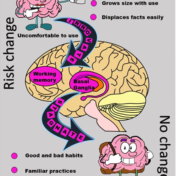
The brain holds on and can even create a meltdown for several reasons. Stored mental barriers within the brain’s amygdala make it harder for some people to let go. You’ve likely noticed others rewire their brains’ plasticity to adjust and move on quickly – in refreshing ways, and with far greater ease. Like any newly acquired skill, it’s difficult at first and grows with use.
Tone skills at the MITA Brain Center
Politics and religion discussions highlight good or poor tone skills faster than less controversial topics. Yet, observe the difference, when every push forward holds people as the highest capital. Or watch the wonder of communication tactics that serve as tools to build goodwill across differences. In both cases, mind-bending ideas emerge in ways that surprise a group with innovative adventures forward together.
It’s why brain based tone skills are central to MITA’s Manifesto, and it’s how innovative leaders work with rather than against human brainpower. Can you see how ideas reach deeper and wider in a safe, integrity filled and challenging community? What do you think?